
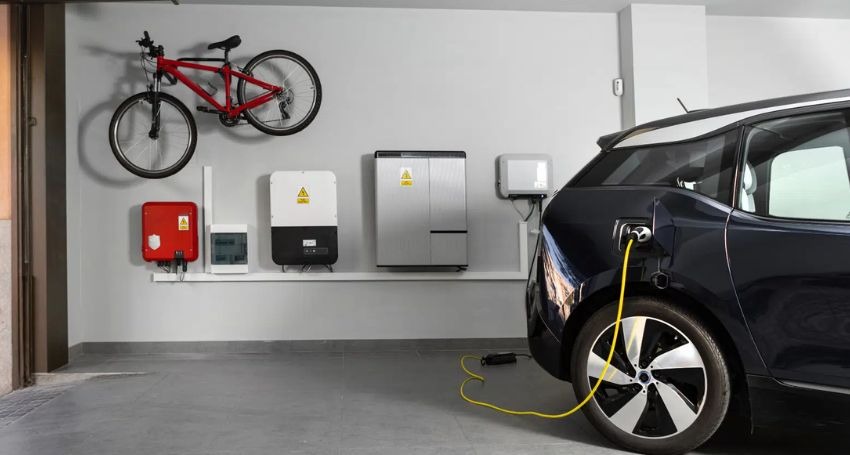
Electric vehicles (EVs) are slowly making their way into Zimbabwe. More people are importing EVs from South Africa, the UK, and Japan—and the first question that comes up is: how do I charge it affordably and reliably? With ZESA’s challenges and the rising cost of electricity, the answer many are turning to is solar-powered EV charging.
But what does that actually look like for a home or small business? Let’s break it down.
- How Much Power Does an EV Need?
Charging an EV is not like charging a phone—it’s a big load. A small plug in Hybrid uses a battery around 24–40kWh whereas a Tesla or larger SUV EV might have a battery of 60–100kWh.
If you plug into ZESA, charging once can burn through a big chunk of your monthly units. That’s why pairing your EV with solar makes sense: instead of draining ZESA, you can “fuel” your car with free sunlight.
- Daytime vs Nighttime Charging
Most Zimbabweans want to charge their EVs overnight, the same way they charge their phones. But solar only produces power during the day. This means:
- If you want to charge at night, you’ll need a big enough battery bank to store the solar energy produced in the day.
- If you’re home during the day (say you park at 3PM), you could charge directly from your solar panels with a smaller battery setup.
- How Many Panels Do You Need?
Let’s take an example, suppose you have a plug in Hybrid (40kWh battery). If you want to charge it fully in one day, you’d need around 8–10kW of solar panels plus batteries, depending on sunlight. That’s about 20 panels (mono 580W panels) on your rooftop factoring in inefficiencies. If your EV only needs a “top-up” daily, you can get by with fewer panels, but planning for your full battery gives peace of mind.
- What Inverter Do You Need?
A normal home inverter (3kW or 5kW) can run lights, fridges, TVs—but charging an EV is a much heavier load. For EV charging, you’ll need at least a 10kW hybrid inverter. Ideally a 16KW and above will do so that you can also run your other household loads. This ensures your system can push enough power to the EV charger without tripping.
- AC vs DC Charging
There are two types of EV charging:
- AC Charging (Slower, 6–8 hours): Most home chargers fall into this category. It’s affordable and works well with residential solar systems.
- DC Fast Charging (1–2 hours): This is what you see at public charging stations. It requires much more power and is expensive to install—so not practical for most homes in Zimbabwe (yet).
- Battery Bank Considerations
If you plan to charge at night, you’ll need a large lithium battery bank. For example, you’d need at least 40kWh of battery storage (e.g., three 15kWh Dyness Power Bricks). For daily top-ups instead of full charges, you can work with less storage.
- So, Where Do You Start?
- Step 1: Confirm your EV’s battery size.
- Step 2: Decide if you’ll charge during the day or night.
- Step 3: Size your inverter, panels, and batteries accordingly.
- Step 4: Work with us, Infinity Solar as we are experienced in both solar and EV integration
At Infinity Solar, we can design and install residential EV charging stations tailored to your car and your home. Whether you’re planning for full EV or a plug-in hybrid, we’ll help you size the panels, batteries, and inverter correctly—so your car always has power when you need it.
Get in touch with Infinity Solar today and let’s power your drive with the sun.