
When it comes to solar, the language can feel confusing kW, Ah, kVA, Mono, Hybrid Inverter… it all sounds technical. But understanding these terms is the difference between buying the right system for your home or business.
Let’s break down the most common terms, with simple examples.
- Watt (W) and Kilowatt (kW)
A watt (W) is a unit of power—it measures how much electricity an appliance needs to run. A kilowatt (kW) is simply 1,000 watts. For example, you might have an LED light bulb that consumes 10W and a kettle that uses 2200W or 2.2kW
Now, here’s why this matters for inverter sizes:
- A 3kW inverter can run appliances up to a total of 3,000W at any one time.
- A 5kW inverter can run up to 5,000W.
- If you try to run more than your inverter’s watt rating, it will beep, trip, or shut down.
Example:
If you switch on 2 fridges (450W each = 900W), a TV (100W), lights (200W), and an iron (1,000W), your load is 2,200W.
A 3kW inverter can handle this. But if you add a 2,200W kettle, your total becomes 4,400W—too much for 3kW, but fine for a 5kW inverter.
- kVA (Kilovolt-Amps)
This is a measure of apparent power, often used for generators and sometimes inverters. For solar, you mostly care about kW, but note:
- Inverters are often rated in kVA.
- For most systems, 1kVA ≈ 0.8kW.
So, a 5kVA inverter can realistically run about 4kW of appliances unless if the power factor is 1.
- Ampere-hour (Ah)
This term shows up with batteries. It measures how much current a battery can provide over time. A 100Ah battery at 12V stores 1,200Wh (1.2kWh) of energy. A 100Ah battery at 24V stores 2400Wh (2.4kWh) of energy. Here is a quick question for you. What is bigger a 50AH 48V battery or a 100AH 24V? The answer is they are the same size because each can store 2400W of energy. Just because a battery has a high voltage or a bigger AH doesn’t mean its big.
- Voltage (V)
Voltage is the “pressure” of electricity. Solar systems often come in 12V, 24V, or 48V setups. Higher voltages are more efficient for larger systems.
- Small setups (lights, phone charging) often run on 12V.
- Medium setups (3–5kW inverters) usually run on 24V or 48V.
- Large systems (10kW+) almost always use 48V for efficiency.
Now, here’s where it sometimes confuses people: you’ll see batteries labeled 52V or 25V and wonder if they can work with 48V or 24V systems.
The answer is yes—they are designed that way.
- A so-called 48V battery is actually a nominal rating. When fully charged, it usually sits at around 52V–54V. When nearly empty, it can drop closer to 44V.
- Similarly, a 24V system often uses batteries that charge up to 25V–27V at full and discharge down to around 21V.
Inverters are built with this voltage range in mind, so there’s no problem running a 52V battery on a 48V system or a 25V battery on a 24V system—it’s the same thing in practical terms. For example, if you have a 48V inverter and connect it to a lithium battery, you’ll often see the screen showing 52V when fully charged. That doesn’t mean there’s a mismatch—it simply shows the battery at full.
- Mono Panels
When buying solar panels, you’ll hear terms like mono and poly.
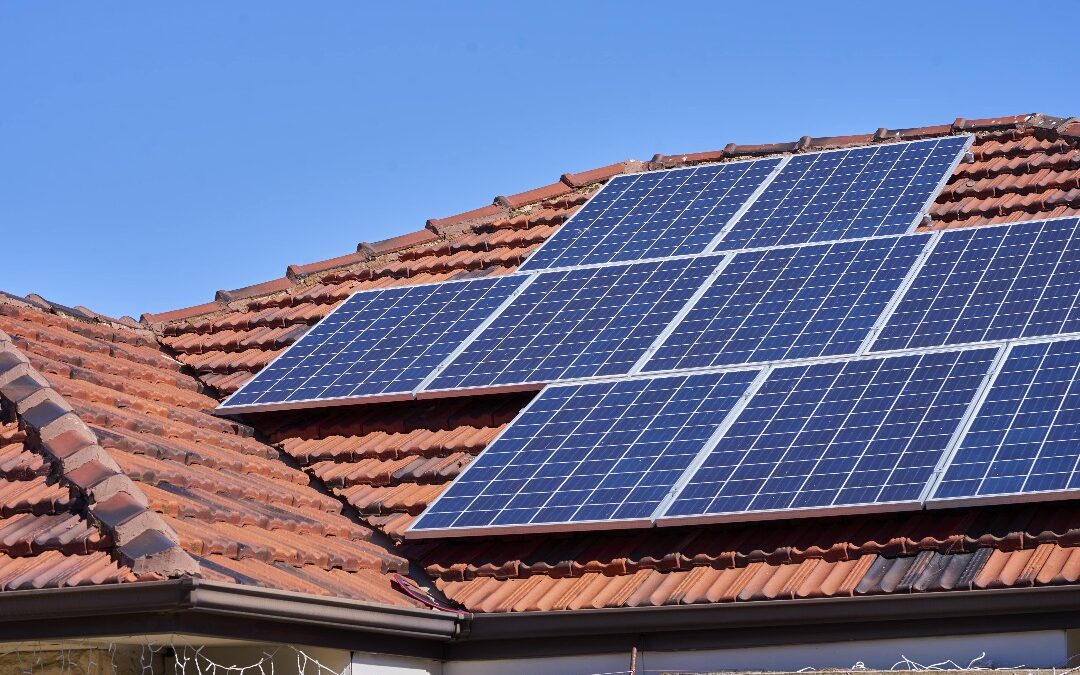
- Mono (monocrystalline panels): When buying solar panels, one of the terms you’ll hear is mono (monocrystalline panels). These are made from a single, continuous piece of silicon, which makes them more efficient and able to produce more power in limited space. They also perform better in cloudy or low-light conditions. Because of this higher efficiency, mono panels are usually more expensive.
- Poly (polycrystalline panels): The other common type is poly (polycrystalline panels). These are made from multiple silicon fragments melted together, which makes them cheaper to produce but slightly less efficient than mono. To generate the same power, you’ll need more panels, meaning more roof or ground space.
- Hybrid Inverter
A hybrid inverter is the heart of most modern solar systems. Unlike older inverters that could only run on solar or ZESA, a hybrid inverter can take power from solar panels, batteries, and ZESA—and intelligently decide how to use them.
Example:
- During the day, it runs loads directly on solar.
- If clouds pass, it tops up from the battery.
- If both are low, it falls back on ZESA.
This flexibility is why hybrid inverters are now the standard in Zimbabwe—they give you uninterrupted power and reduce your ZESA reliance without wasting energy.
Do you have other solar terms you’d like explained? Reach out to our technicians on WhatsApp for free support—we’re here to make solar simple for you. Don’t let jargon confuse you. Talk to Infinity Solar today—where we make solar simple.